Every year the pattern is the same. The first properly cold week arrives, and the phone starts ringing with scooters that won't hold a charge, won't start, or ran out halfway home.
Almost none of those are caused by the cold on its own. Cold weather exposes problems that were already there — a battery on its last legs, a tyre that was low, a charger that hadn't been working properly for weeks. Autumn is when to catch them.
1. Get the batteries tested
This is by far the most important item, and the one most likely to leave you stranded.
Cold reduces the capacity a battery can deliver — sometimes substantially. A battery that's already tired but coping in mild weather can simply stop coping in December. A proper load test tells you where you stand; a full-looking gauge tells you nothing.
We test batteries as part of every service. If they're near the end, replacing them in October is a planned cost. Replacing them in January is an emergency.
2. Sort out where it charges
An unheated shed or garage is a poor place to charge in winter. Cold batteries charge badly and hold less.
- Charge somewhere dry and above freezing where you can.
- If the scooter can't come indoors, see whether the batteries can — many packs lift out.
- Charge after every use, not when it's flat. Little and often is right for these batteries.
- Never store it flat over winter. Leaving a scooter with flat batteries in a shed will ruin them, sometimes within weeks.
- If you're not using it, still charge it fully at least once a fortnight.
There's more detail in our battery care guide.
3. Check the lights and indicators
It's dark by mid-afternoon in December. On a Class 3 scooter, working lights and indicators aren't optional — they're part of what makes it road-legal.
Check front and rear lights, both indicators, the hazard function and the reflectors. Bulbs and lenses are inexpensive; being unlit on a road in the dark is not a risk worth taking.
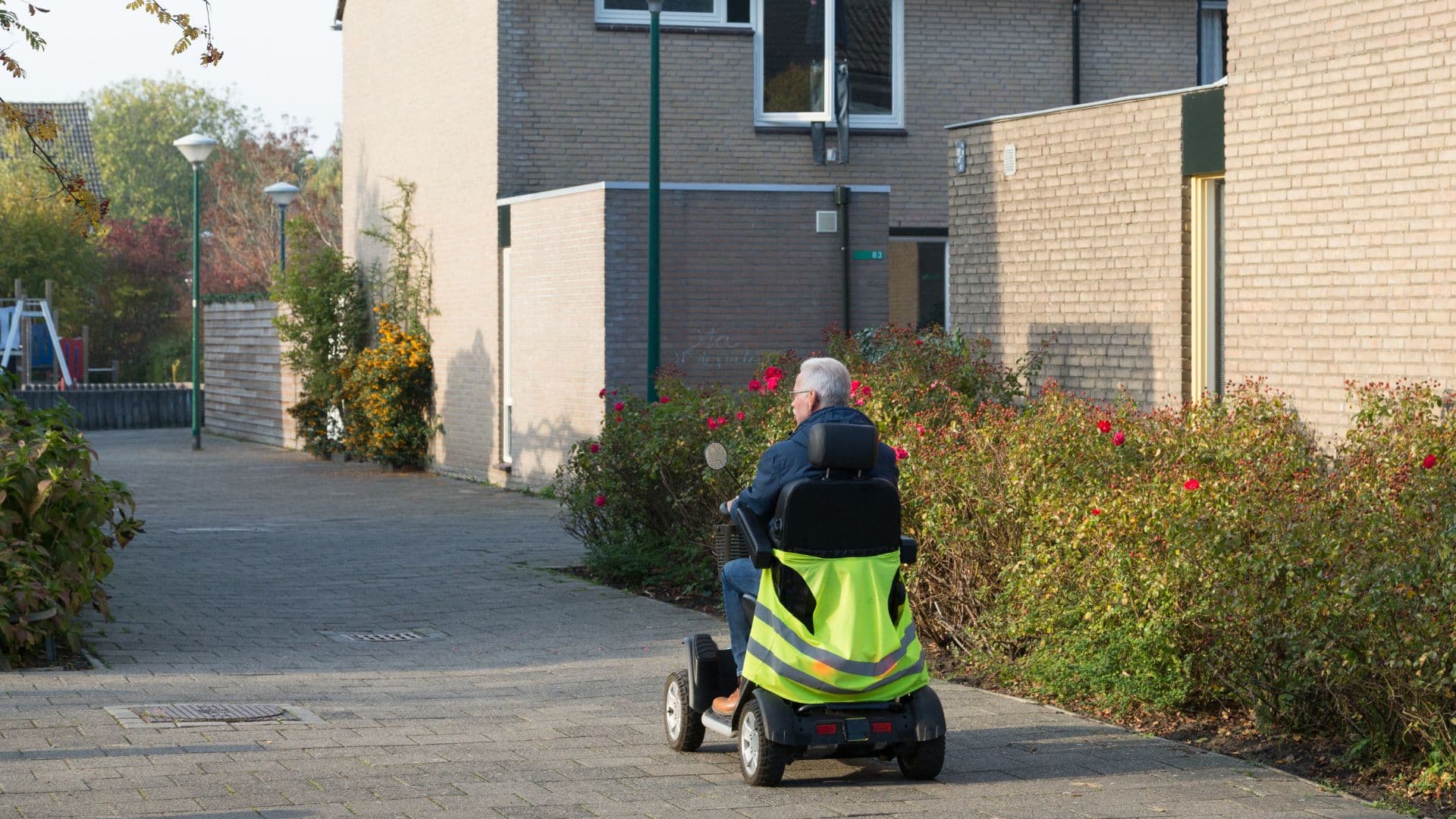
Even on a Class 2 pavement scooter, being seen matters. High-visibility covers and reflective strips make a real difference on a grey afternoon.
4. Tyres and grip
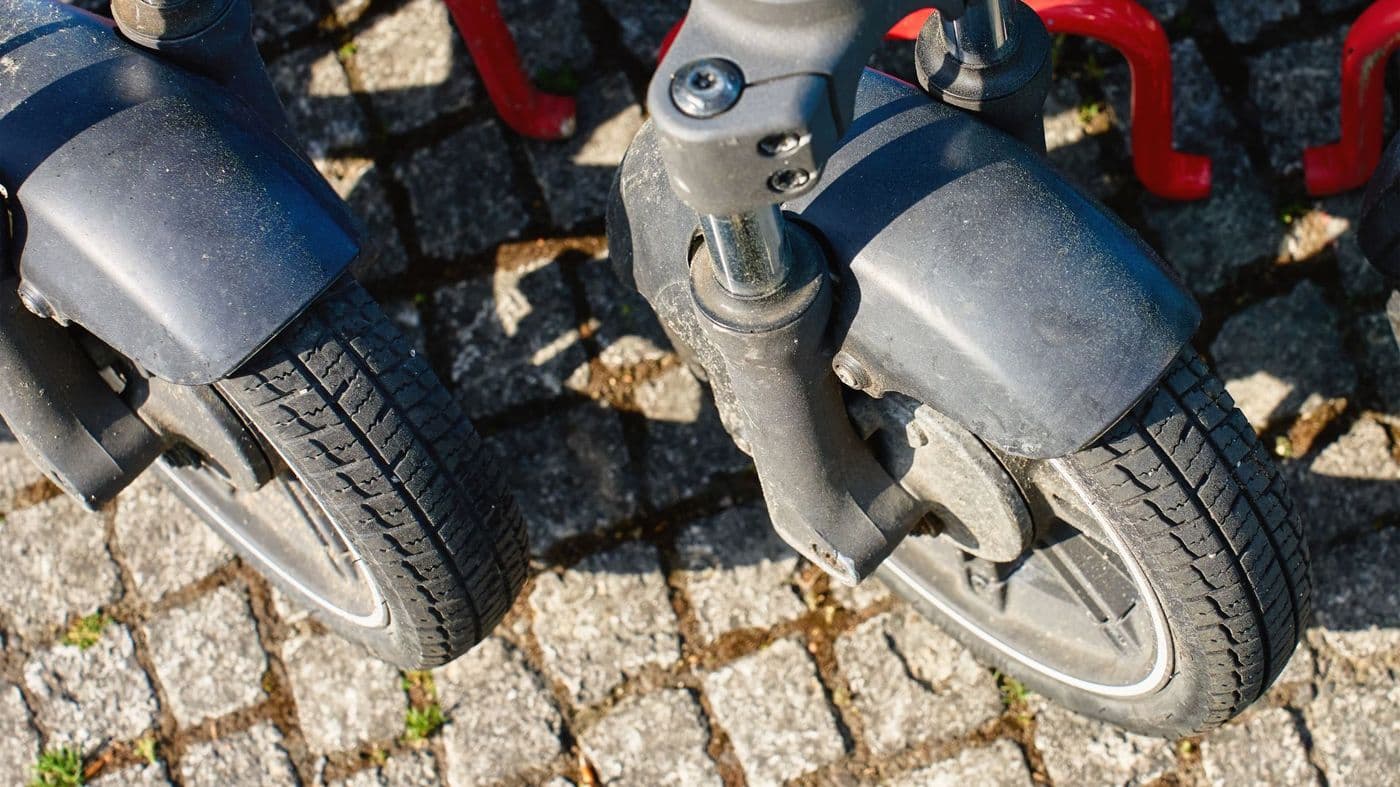
Wet leaves, frost and standing water all reduce grip, and tyres do more work in winter.
- Check tread depth — worn tyres slide, especially on painted road markings and metal drain covers.
- Check pressures on pneumatic tyres. Under-inflated tyres wallow and drain the battery faster.
- Look for perishing or chunks missing on solid tyres.
If your scooter is due a service, book it in autumn. Everyone books in January, and by then you're waiting behind the people who have already broken down.
5. Keep it clean and dry
Road salt is corrosive. If you've been out on treated roads, wipe the scooter down when you get back — particularly around the battery box, the wiring and any exposed metal.
A waterproof cover is worth having if the scooter lives outside or in a porch. Damp causes electrical faults that are miserable to trace and expensive to fix.
6. Adjust what you expect from it
Plan shorter trips in cold weather. A scooter that comfortably managed your usual round trip in July may not in January, and that isn't necessarily a fault.
Dress for sitting still in the cold, too. You generate very little heat on a scooter, so you'll feel it far more than you would walking — a decent windproof layer and gloves make more difference than most people expect.
Book a winter check
We service all makes and models, not just the ones we sell, and we offer pickup and return — we'll collect the scooter and bring it back to you. A loan scooter may be available while yours is with us, subject to availability.
Call 01234 267393 to book, or read more about what's included in a service.