Search this question online and most of what comes back is written for American or Australian buyers, with their prices, their terminology and their road rules. This is the UK version, written by people who sell and service both.
The short version: a scooter and a powerchair are not competing products. They solve different problems. Picking between them is less about budget than about your arms, your doorways and how much of the day you expect to spend sitting in it.
What is the difference between a powerchair and a mobility scooter?
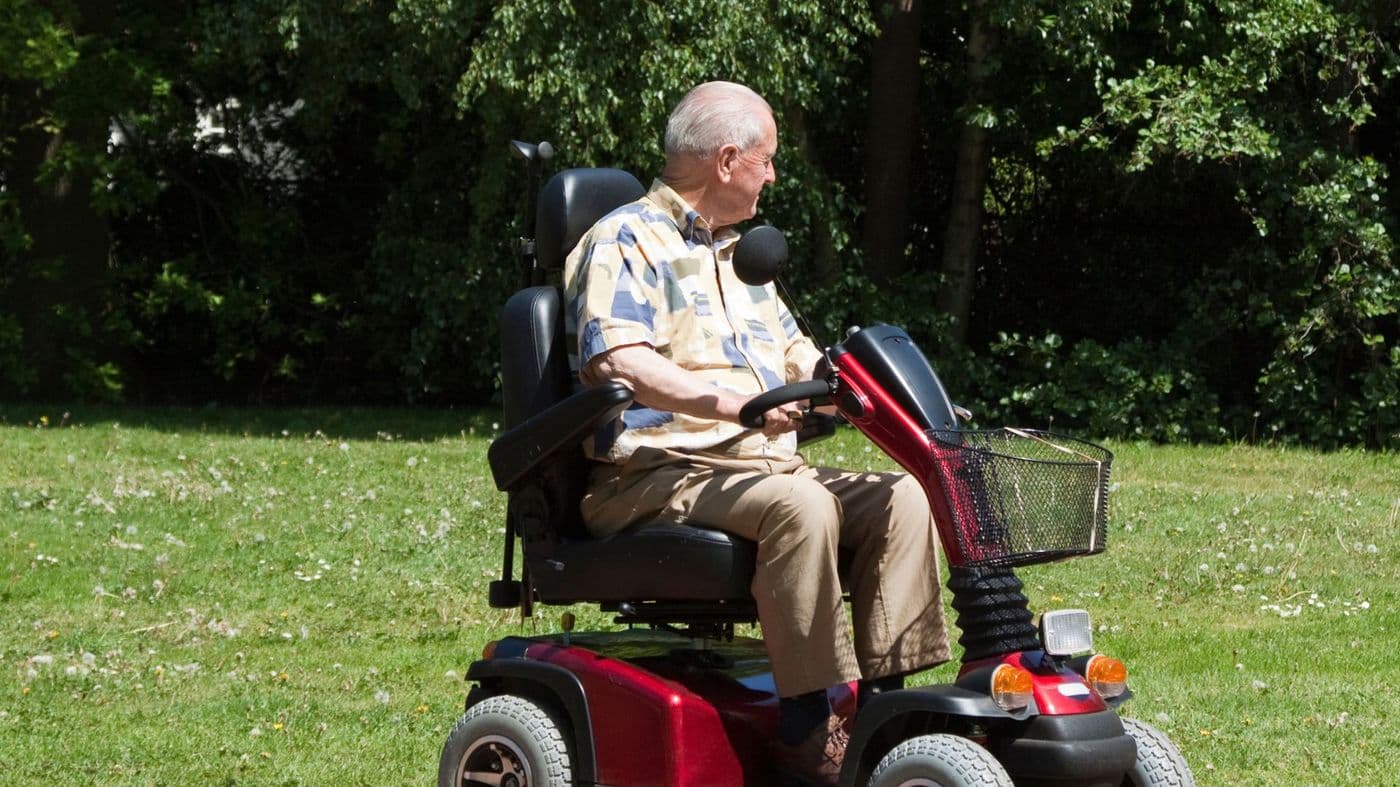
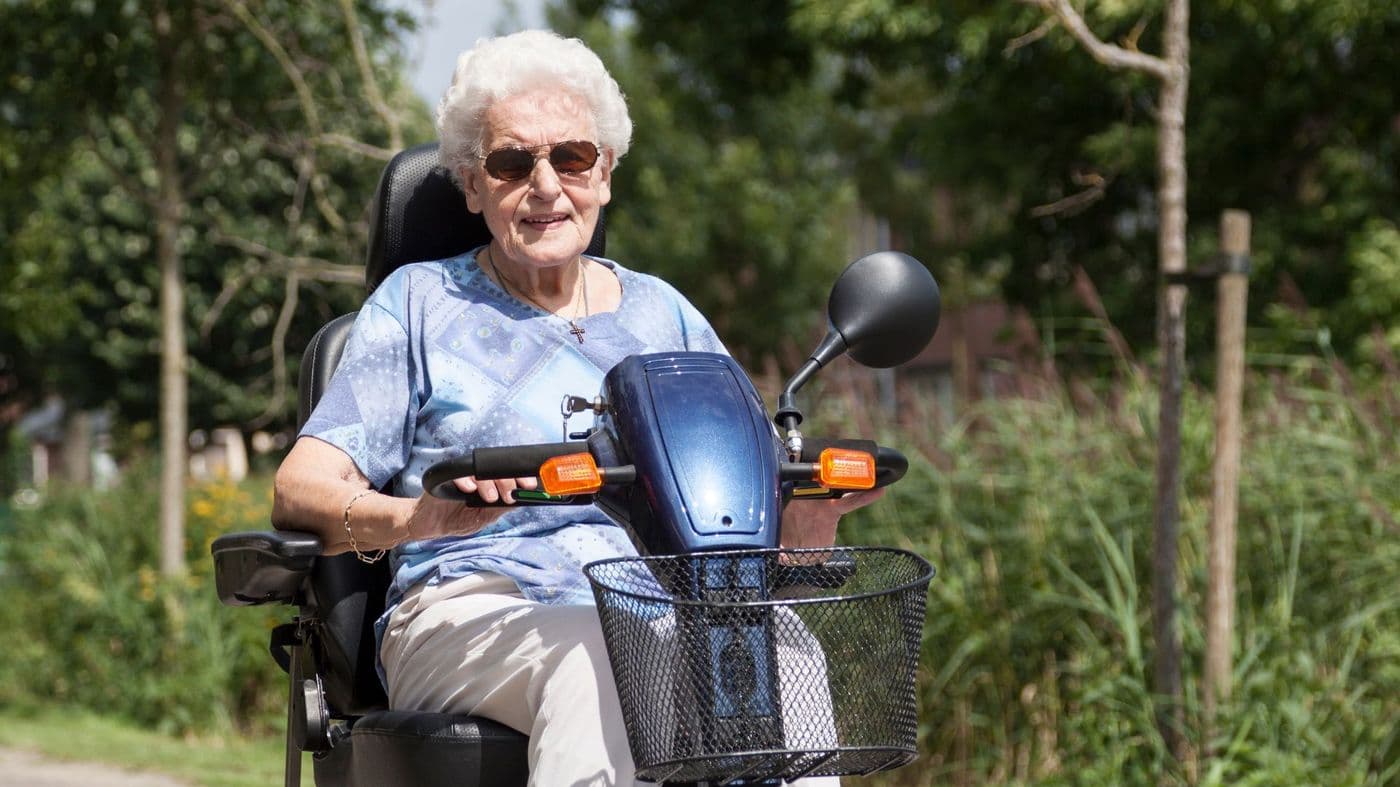
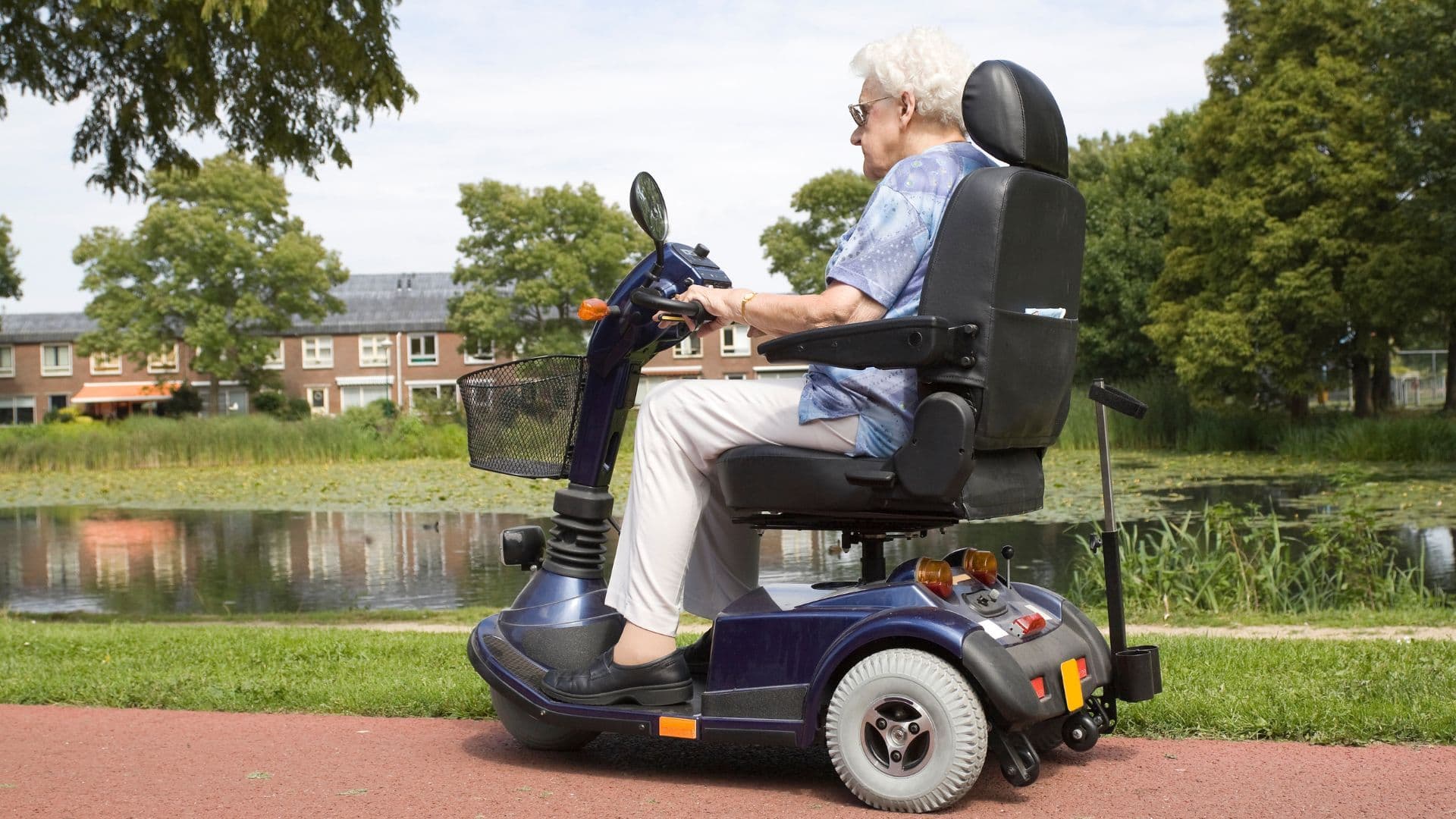
A mobility scooter is steered by a tiller — a handlebar you push and pull with both hands — and has a fixed seat, usually with a swivel so you can get on and off. A powerchair is steered by a joystick under one hand, has powered wheels close under the seat, and turns in roughly its own length. That single difference in the controls drives almost everything else.
| Mobility scooter | Powerchair | |
|---|---|---|
| Steering | Tiller, both hands | Joystick, one hand |
| Turning circle | Wide — like a small car | Turns almost on the spot |
| Indoors | Awkward in most homes | Designed for it |
| Getting on and off | You step across to the seat | You transfer into the chair |
| Seating | Comfortable captain’s seat | Can be specified for posture and pressure care |
| All-day sitting | Not really intended for it | Yes, with the right seating |
| Outdoor range | Generally further | Varies by model |
| Legal class | Class 2 or Class 3 | Class 2 or Class 3 |
Can I use a mobility scooter indoors?
Usually not comfortably. A mobility scooter needs a wide arc to turn, and most British homes — particularly hallways, bathroom doorways and the gap between a sofa and a coffee table — do not give it one. Some small boot scooters manage in an open-plan bungalow. Most do not. If you need something that works inside the house as well as outside it, that is a powerchair question, not a scooter question.
Do I need arm strength for a mobility scooter?
Yes, more than people expect. A tiller has to be held and steered against the camber of a pavement, and pulled round on a turn. If your grip, shoulders or wrists are unreliable — arthritis, a stroke affecting one side, a progressive condition — a scooter becomes tiring and eventually unsafe. A joystick asks far less: it can be positioned on either side, and it can be swapped for other controls where a hand will not do.
Which is better for posture and long periods of sitting?
A powerchair, without much argument. A scooter seat is a good chair for an hour or two. A powerchair can be specified around the person — seat width and depth, back angle, tilt, powered recline, pressure-relieving cushions, leg and head support. If you will be in it for most of the day, or if pressure care is a concern, that specification is not a luxury and it is worth involving an occupational therapist.
Which is better for going further?
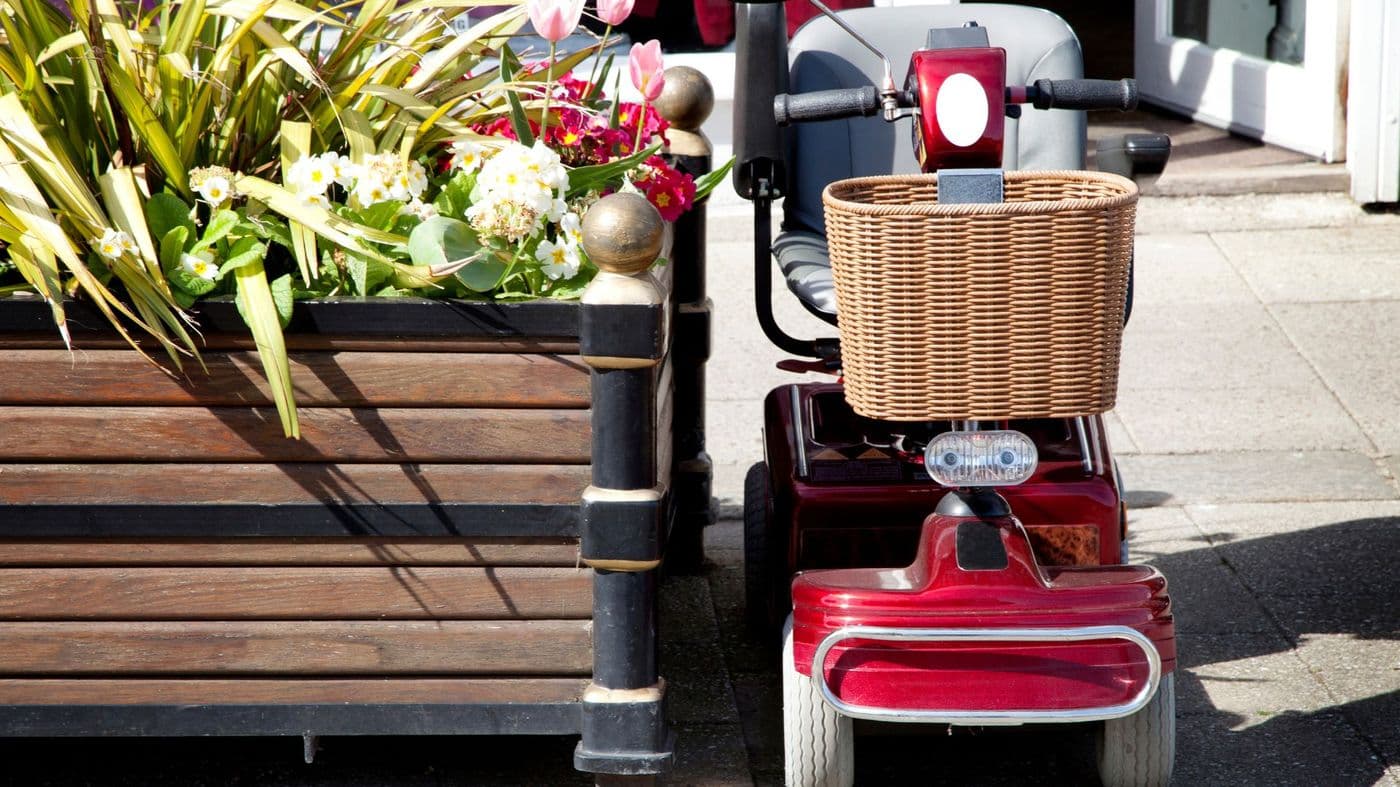
Generally a scooter, and a Class 3 road scooter in particular. If your problem is that you can manage the house perfectly well but cannot walk to the shops, the park or the bus stop, a scooter is usually the more sensible answer — bigger wheels, a more comfortable ride over rough pavement, and somewhere to put the shopping.
Can I get either on the Motability Scheme?
Both scooters and powerchairs are available through the Motability Scheme, which is less well known than the car side of it. We are an accredited dealer — there is more on our Motability page.
How do I decide?
- Will you use it indoors? If yes, that points hard at a powerchair.
- Can you steer with both hands, reliably, for as long as you will be out? If not, powerchair.
- Can you step across onto a seat, or do you need to transfer? Stepping across suits a scooter.
- How long will you sit in it at a stretch? All day means powerchair seating.
- Where does it live, and how does it get there? Storage, charging and thresholds decide more purchases than specification does.
- Does it need to go in a car? That narrows both lists considerably.
We would rather spend an hour with you and sell you nothing than sell you the wrong one. Come and sit in both — it answers the question faster than any amount of reading.
Try them side by side
This is a decision that gets made properly in about twenty minutes with both machines in front of you, and very badly from a website. We keep both in the showroom at Stewartby, there is free parking at the door, and we do a free home demonstration on anything we sell — so you can see how it handles your own doorway, your own kerb and your own boot. Ring 01234 267393.