This question comes up constantly in the showroom, and there is almost nothing useful written about it. The guidance that exists is aimed at housing officers and fire safety officers, buried in PDFs that no ordinary person is ever going to find. Here is the plain-English version.
Can I store a mobility scooter inside my flat?
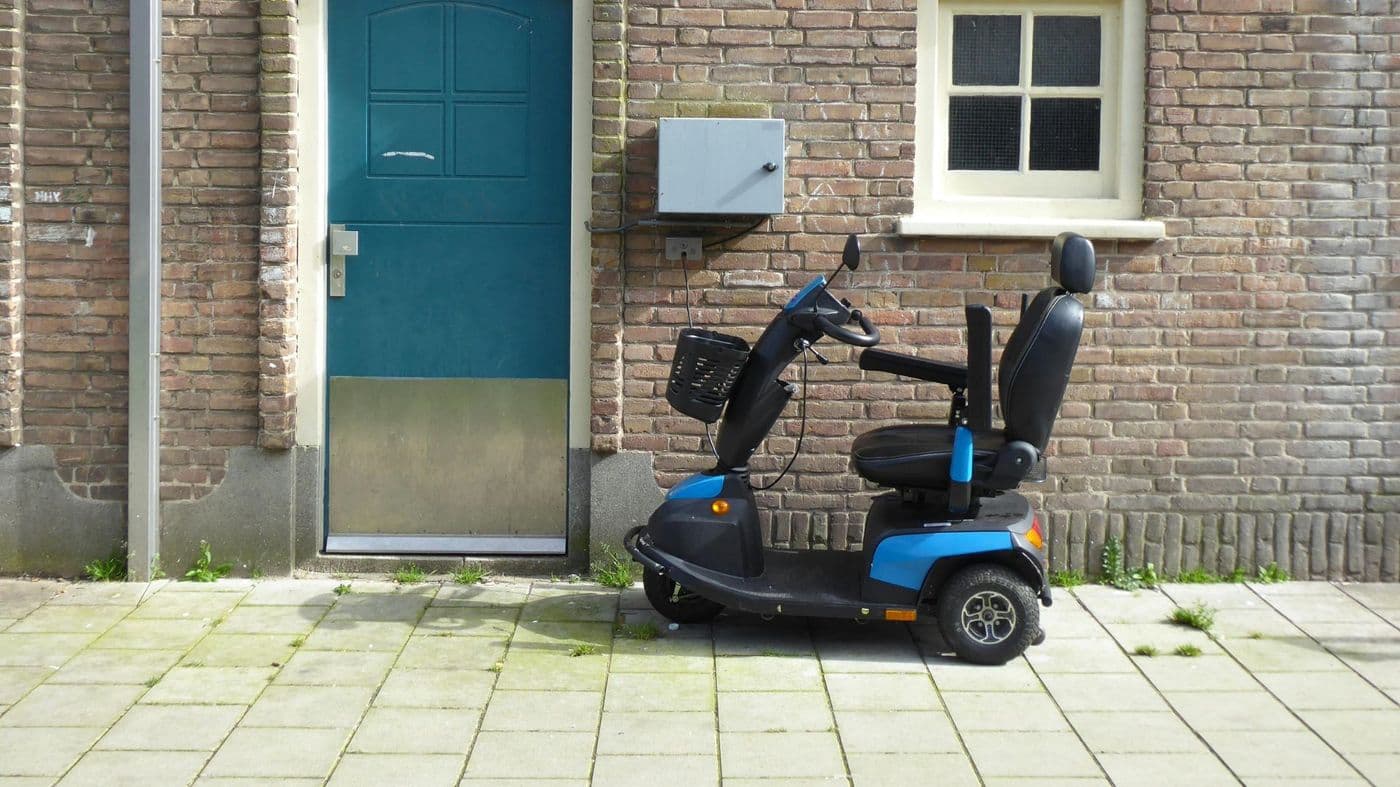
Generally yes. Inside your own front door is your space, and a scooter kept there is not blocking anybody's escape route. The practical limits are the ones you would expect: the width of your doorway, the turning space in the hall, and whether you can get it in and out without a fight. It is worth measuring before you buy rather than after.
Can I keep a mobility scooter in a communal corridor?
Almost certainly not, and this is the part people are surprised by. Shared corridors, lobbies, stairwells and landings are escape routes. Anything stored in them narrows the route and adds fuel to a fire, and building owners are obliged to keep them clear. National Fire Chiefs Council guidance is that scooters should never be stored or charged in dead-end corridors, or in buildings served by a single staircase.
This is not the landlord being difficult. It is the one part of the building that has to work perfectly on the worst night of your life.
Can I charge a mobility scooter overnight in a communal area?
Where a building does provide a communal scooter store, the fire safety guidance advises that charging should not take place overnight — the commonly cited window is that charging should stop between 8pm and 8am, so that any fault develops while people are awake and about rather than asleep. Individual buildings may set stricter rules, and some provide dedicated stores with charging points and their own conditions.
Is it safe to charge a mobility scooter overnight at home?
Charging inside your own flat overnight is normal and is what most owners do. Use the charger that came with the machine, plug it straight into a wall socket rather than an extension reel, do not cover it, and do not charge it in the hallway where it would block your own way out. If a charger ever gets hot, smells, or the machine has had a knock, stop using it and get it looked at. We test batteries and chargers as part of every service.
What if my landlord says no?
- Ask for the policy in writing, and ask specifically what is and is not permitted rather than accepting a flat no.
- Ask whether a smaller or folding scooter that lives inside your flat would be acceptable — it very often is, when a full-size one is not.
- If your landlord is a council or housing association, ask about a reasonable adjustment under the Equality Act. Refusing all storage may be reasonable; refusing to discuss any solution generally is not.
- Ask your local authority's occupational therapy service for a view. A written recommendation carries weight.
- If it comes to it, a boot scooter kept in the car and charged indoors sidesteps the problem entirely.
What about sheltered housing?
Sheltered and supported housing usually has a written scooter policy, because the question comes up so often. Many schemes have a communal store with charging points, a permit system and a limit on numbers — which can mean a waiting list. Ask early. It is the single most common reason we see somebody buy the wrong size of machine.
Ring your landlord before you ring a dealer. Where it will live and how it will charge shapes the whole decision, and it is a horrible thing to find out afterwards.
The practical answer
If storage is tight, look at boot and folding scooters: they come apart or fold, live indoors, and charge from an ordinary socket. They trade range and ride comfort for that, but for somebody in a flat it is usually the right trade. We keep them in the showroom and you are welcome to try lifting one before you commit — that is the test that matters. Ring 01234 267393 and tell us about your building, and we will tell you honestly what will and will not work.